
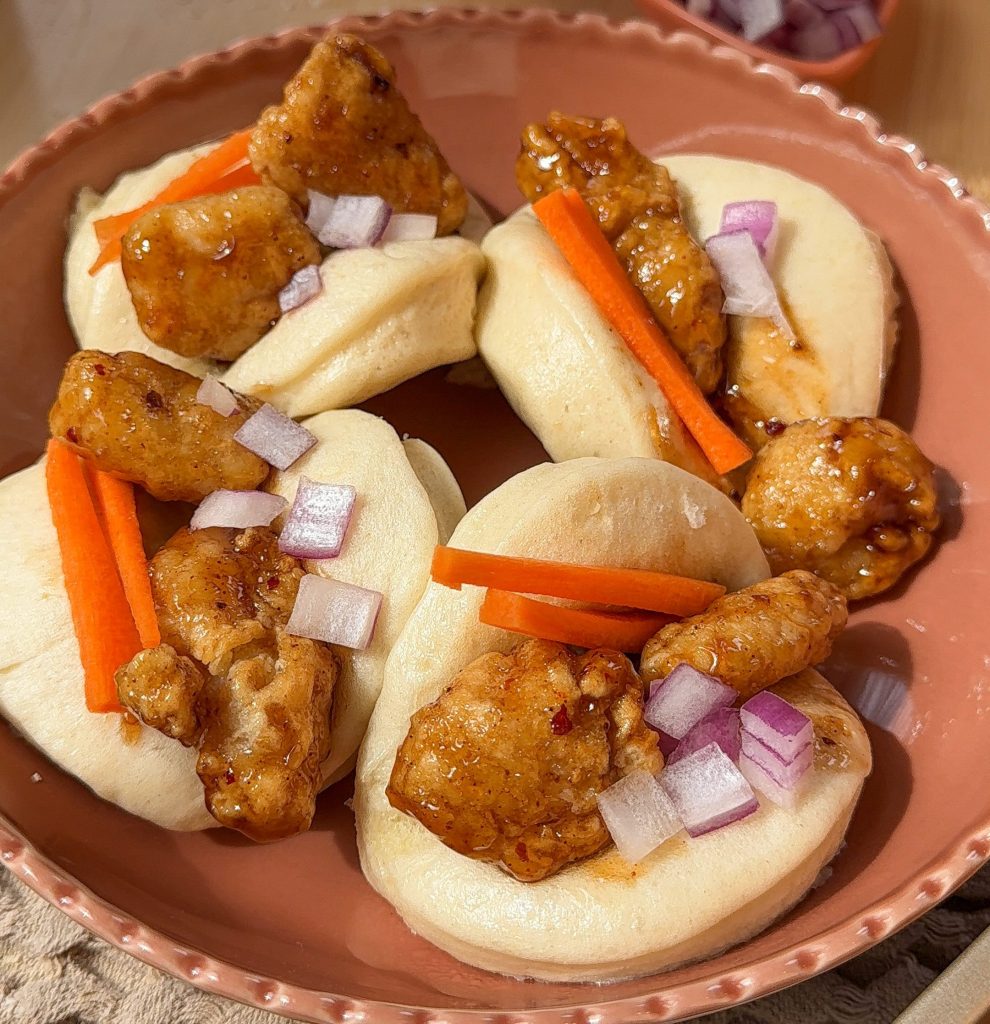
Guys, I did not realize how easy bao buns were to make at home. I always thought they were one of those things you could only get at a restaurant—like something you had to leave to the professionals. But after testing this recipe over and over again (playing around with my house’s temperature and humidity like a mad scientist), I am officially obsessed with homemade bao buns. They are so light, so fluffy, and honestly just so fun to make.
Bao buns have always been one of my favorite things to order when I’m out to eat, but if there’s anyone who loves them more than I do, it’s my boyfriend. So obviously, I had to figure out how to make them myself. And let me tell you—it is so worth it. This recipe makes 15 perfectly soft and pillowy bao buns, which means I had extras to freeze for later, and let me tell you, there is no better feeling in the world than knowing you have homemade bao buns ready to go whenever you want.
So let’s get into it. These bao buns are so easy to make, and I’m going to break it all down for you—ingredients, step-by-step instructions, storage tips, everything. Let’s do this!
Ingredients:
Warm Water & Warm Whole Milk
These two liquids are essential for activating the yeast. Yeast thrives in a warm environment, and the combination of water and milk gives the dough moisture and a slight richness. Just make sure the temperature is between 100-110°F (37-43°C)—too hot, and you’ll kill the yeast; too cold, and it won’t activate properly.
Active Dry Yeast
This is what makes the bao buns light and airy! Yeast feeds on sugar and creates air pockets in the dough, which helps it rise. Always check that your yeast is fresh—if it doesn’t bubble up when mixed with warm liquid and sugar, it’s likely expired or inactive.
Granulated Sugar
A little sugar gives the buns a hint of sweetness and also helps feed the yeast. Yeast loves sugar, so adding it helps speed up fermentation and makes the dough rise beautifully.
All-Purpose Flour
This is the base of our bao buns. I use all-purpose flour because it gives the buns the perfect balance between soft and chewy. You don’t need bread flour here—AP flour works great!
Baking Powder
Even though yeast does most of the work for rising, baking powder gives an extra boost to ensure the buns stay fluffy after steaming. It helps create a soft, pillowy texture.
Salt
Salt balances the flavors and enhances everything else in the dough. You don’t need a lot—just a little fine-grained salt does the trick.
Vegetable Oil
A little bit of neutral oil, like vegetable or canola oil, keeps the dough soft and pliable. It also prevents the buns from drying out too quickly.
Equipment Needed for Fluffy Bao Buns
Making bao buns at home is super easy, but having the right equipment will make the process smoother and more efficient! Here’s what you’ll need:
Bao Bun Substitutions & Modifications
-
Dairy-free? Use plant-based milk.
-
Gluten-free? Try a 1:1 gluten-free flour blend.
-
Sweeter buns? Add an extra tablespoon of sugar.

Easy Fluffy Bao Buns Recipe (Perfect for Freezing & Customizing Fillings)
Ingredients
- ⅓ cup warm water 100-110°F
- ½ cup warm whole milk 100-110°F
- 1 tablespoon active dry yeast
- 4 tablespoons granulated sugar
- 2 ½ cups all-purpose flour
- ½ teaspoon baking powder
- ¼ teaspoon fine-grained salt
- 2 tablespoons vegetable oil
- Additional neutral oil for brushing
Instructions
- In a small bowl or measuring cup, combine ⅓ cup warm water (100-110°F), ½ cup warm whole milk (100-110°F), 1 tablespoon active dry yeast, and 4 tablespoons granulated sugar. Stir gently until the yeast is dissolved. Let the mixture sit for 5-10 minutes until it becomes foamy and bubbly on top. This step ensures the yeast is alive and active. If your yeast doesn’t bubble, it may be expired, or your liquid may have been too hot (which kills the yeast) or too cold (which doesn’t activate it).
- In a large mixing bowl or the bowl of a stand mixer, whisk together 2 ½ cups all-purpose flour, ½ teaspoon baking powder, and ¼ teaspoon fine-grained salt. These ingredients form the base of the bao dough. The baking powder gives the buns extra fluffiness, while the salt enhances the overall flavor.
- Pour the activated yeast mixture and 2 tablespoons vegetable oil into the dry ingredients. Using a stand mixer with a paddle attachment, mix on low speed until a rough dough forms. Once combined, switch to the dough hook attachment and knead on medium speed for 5-7 minutes until the dough becomes smooth, elastic, and slightly tacky. If kneading by hand, transfer the dough to a lightly floured surface and knead for the same amount of time until you achieve the right texture.
- Lightly grease a large mixing bowl with oil. Place the dough inside, turning it to coat all sides with oil. Cover the bowl with a clean kitchen towel or plastic wrap and let it rise at room temperature for 1-2 hours, or until it triples in size. The ideal room temperature for rising is 75-80°F. If your kitchen is cooler, you can place the bowl in a slightly warm oven (turned off) to help it rise faster.
- Once the dough has risen, lightly flour your work surface and roll the dough out to ¼-inch thick. Using a 3-inch round cutter, cut out circles from the dough. Gather the scraps, re-roll, and continue cutting until you have used all the dough. This recipe makes 15 bao buns.
- Lightly brush one side of each dough circle with oil—this prevents them from sticking together when folded. Place a chopstick in the center of the circle and fold the dough in half over the chopstick to create a half-moon shape. Gently press down on the fold, then carefully remove the chopstick. This method ensures that once steamed, the buns will easily open for filling.
- Place each shaped bun on a piece of parchment paper, ensuring they have a little space between them. Cover lightly with a towel and allow them to rise for another 30 minutes. This second rise helps the buns develop their signature fluffiness.
- Set up a bamboo steamer, metal steamer, or any steaming method you prefer. Arrange the buns inside, leaving space between them as they will expand. Steam over medium-high heat for 8-10 minutes, or until the bao buns are puffy, soft, and cooked through. Once done, carefully remove them from the steamer and let them rest for a couple of minutes before serving.
- Gently open the buns and fill them with your favorite ingredients! Classic bao bun fillings include:
- Braised pork belly with hoisin sauce and scallions
- Crispy tofu with pickled vegetables
- Korean fried chicken with spicy mayo
- Sweet options like Nutella and banana
- Enjoy these light, fluffy, and versatile bao buns, fresh or frozen for later use!
Video
Nutrition
Bao Buns Tips & Tricks
-
Make sure your yeast is fresh! No bubbles = no rise.
-
If your kitchen is cold, let the dough rise in a slightly warm oven (turned off).
-
Steam the buns in batches to prevent overcrowding.
-
Want extra fluffy buns? Let them rise longer before steaming!
Storage Instructions
To Store
Let buns cool completely, then freeze in a single layer on a baking sheet for 2 hours. Transfer to a freezer bag.
To Reheat
-
Steamer: Steam for 5 minutes.
-
Microwave: Wrap in a damp paper towel and microwave for 30 seconds.
More of my recipes
Do you Love Asian-Inspired Recipes? Check Out More of my Favs!Homemade Asian Chicken and Veggie Dumplings Recipe
The Secret to Perfect Thai Chicken Curry with Coconut Milk Recipe
Conclusion
And that’s it—homemade bao buns that are so soft and so fluffy, you’ll never want store-bought again. They’re easier than you think, and once you start making them, you won’t stop. Trust me.
If you try this recipe, let me know in the comments! And don’t forget to tag me on Instagram @munchiesbymallory so I can see your creations. Happy steaming!
Frequently Asked Questions About Homemade Bao Buns
Can I make bao buns ahead of time?
Yes, bao buns are perfect for making ahead. You can prepare and steam them fully, let them cool completely, and then freeze them for later use. They reheat beautifully and taste just as soft and fluffy.
How do I know if my yeast is active?
After mixing the yeast with warm water, warm milk, and sugar, it should become foamy and bubbly within 5 to 10 minutes. If nothing happens, the yeast may be expired or the liquid temperature may be too hot or too cold.
What temperature should the liquid be for yeast activation?
The liquid should be between 100 and 110°F. Liquids that are too hot can kill the yeast, while liquids that are too cool will not activate it properly.
Why do bao buns need baking powder if they already use yeast?
Baking powder gives the buns an extra lift during steaming. It helps create a softer, lighter texture and ensures the buns stay fluffy even after cooking.
Can I make bao buns without a bamboo steamer?
Yes, you can use any steaming setup you have. A metal steamer basket, a collapsible steamer, or even a heat-safe plate inside a pot with a lid will work as long as steam can circulate.
Why are my bao buns dense instead of fluffy?
Dense bao buns are usually caused by inactive yeast, not enough rising time, or overcrowding in the steamer. Make sure the dough triples in size during the first rise and gets a second rise before steaming.
Can I freeze bao buns?
Yes, bao buns freeze extremely well. Let them cool completely, freeze them in a single layer, then store them in a freezer-safe bag. They can be frozen for up to two months.
How do I reheat frozen bao buns?
The best way is to steam them for about 5 minutes until soft and heated through. You can also microwave them wrapped in a damp paper towel for about 30 seconds.
Can I make the dough dairy-free?
Yes, you can substitute the whole milk with a plant-based milk like soy milk, oat milk, or almond milk. The buns will still turn out soft and fluffy.
Can I make bao buns gluten-free?
You can try using a 1:1 gluten-free flour blend, but the texture may be slightly different. Gluten-free doughs often need extra moisture and careful handling.
What are the best fillings for bao buns?
Bao buns are very versatile. Popular fillings include braised pork belly, Korean fried chicken, crispy tofu, pickled vegetables, or even sweet fillings like Nutella and banana.
How long do homemade bao buns stay fresh?
Fresh bao buns are best eaten the same day, but they can be stored in an airtight container in the refrigerator for up to two days. Freezing is the best option for longer storage.




Leave a Reply